

AMAALA: When Sustainability Becomes the New Luxury
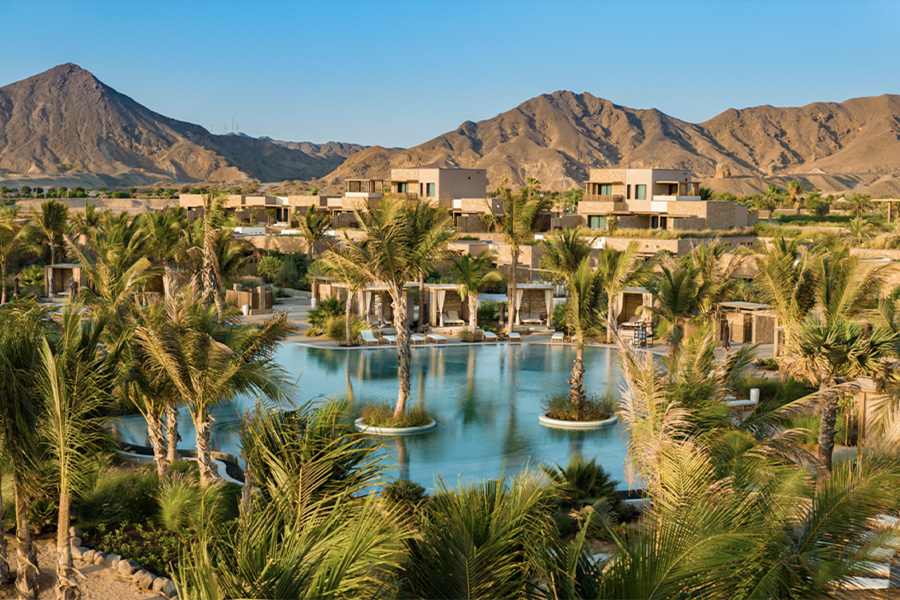
For decades, luxury hospitality competed through spectacular architecture, impeccable service, and increasingly remote and exclusive locations.
Today, however, the world’s most ambitious destinations are being judged by a different standard altogether: not simply by how extraordinary they feel, but by how responsibly they are created.
Few developments illustrate this transformation more clearly than AMAALA, Red Sea Global‘s visionary destination on Saudi Arabia’s northwestern Red Sea coast.
Positioned as a global hub for wellness, art, longevity, and regenerative tourism, AMAALA is not merely redefining luxury travel. It is challenging long-held assumptions about what luxury should represent in the decades ahead.
Beyond Sustainability: The Meaning of LEED Platinum
The Leadership in Energy and Environmental Design (LEED) certification, developed by the U.S. Green Building Council, remains one of the world’s most respected frameworks for evaluating sustainable buildings and communities.
Its highest distinction, LEED Platinum, is reserved for projects that demonstrate exceptional performance across environmental metrics, including energy efficiency, water conservation, resource management, mobility, resilience, and human wellbeing.
While many hospitality brands pursue sustainability certifications, very few attempt to apply these principles across an entire destination ecosystem.
This is where AMAALA stands apart.
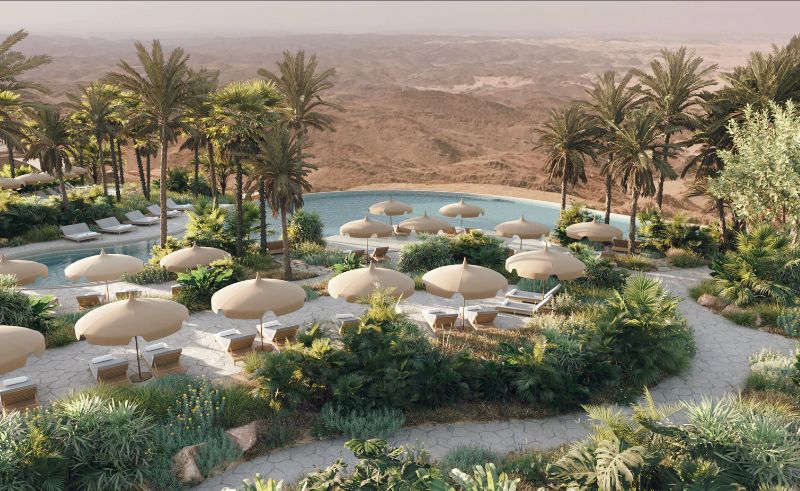
Building a Sustainable Destination, Not Just a Resort
In 2024, the AMAALA masterplan achieved LEED Platinum pre-certification under the LEED v4.1 Cities and Communities framework, confirming that sustainability was embedded into the destination from the earliest stages of planning.
Since then, the sustainability ambition has expanded significantly.
In 2026, both AMAALA Triple Bay and AMAALA Staff Village achieved LEED Platinum for Communities certification, reflecting excellence in sustainable urban planning, infrastructure, mobility solutions, environmental stewardship, governance, resilience, and quality of life.
This distinction is particularly important because it shifts the focus away from individual buildings.
Rather than asking whether a hotel is sustainable, the question becomes:
Can an entire destination operate as a sustainable ecosystem?
AMAALA’s answer appears increasingly ambitious.
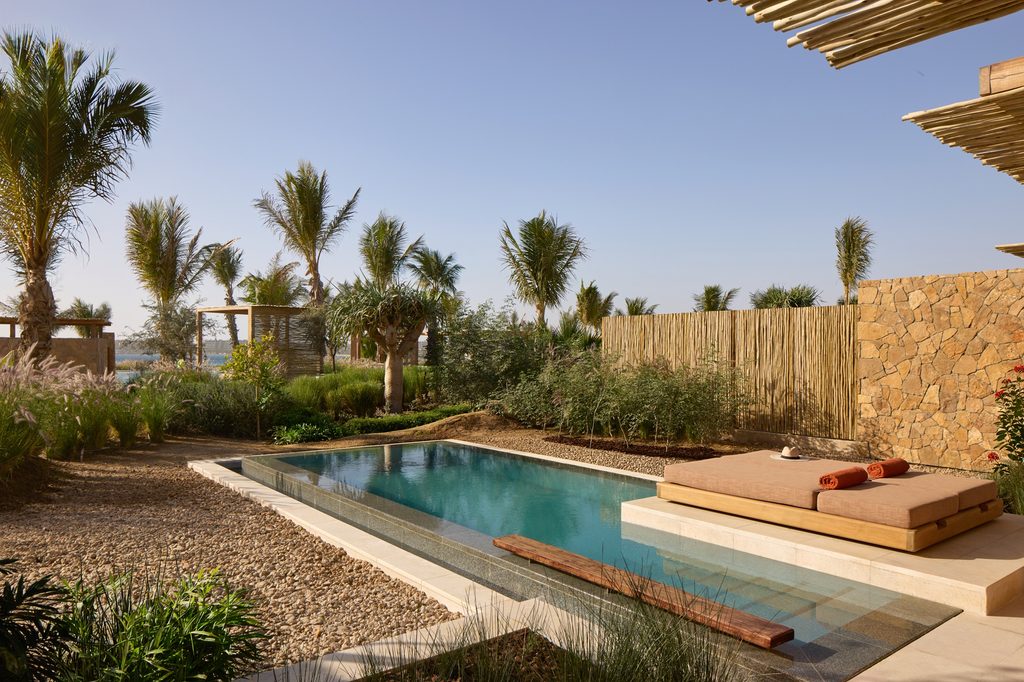
Powered by Renewable Energy
Unlike traditional luxury developments, where sustainability is often introduced as a complementary feature, AMAALA has been designed as part of a broader renewable-energy ecosystem developed by Red Sea Global.
The destination is planned to operate entirely on renewable energy infrastructure, significantly reducing operational emissions while supporting large-scale tourism development.
The wider Red Sea Global ecosystem continues to set regional sustainability benchmarks.
In 2026, Red Sea International Airport became Saudi Arabia’s first LEED Platinum-certified airport and one of only a handful worldwide to achieve the distinction, reinforcing the developer’s commitment to embedding sustainability throughout every layer of the guest journey, from arrival to accommodation.
The message is clear: Sustainability at AMAALA is not limited to hotels.
It is being designed into the infrastructure itself.
Six Senses AMAALA: Where Luxury Meets Regeneration
The philosophy becomes tangible at Six Senses AMAALA, one of the destination’s flagship resorts and the first hotel within AMAALA to achieve LEED Platinum certification.
Set between desert cliffs, coral-rich waters, and a protected mangrove lagoon, the resort demonstrates how luxury hospitality can coexist with ecosystem preservation. The mangrove habitat plays a critical role in supporting biodiversity, stabilizing coastlines, and naturally capturing carbon. Guests are invited to engage with these environments through conservation-focused experiences led by marine specialists and environmental teams.
Yet the most compelling aspect of Six Senses AMAALA may not be its sustainability credentials.
It is the way sustainability intersects with another defining trend shaping the future of travel: longevity.
The Rise of Longevity Hospitality
Luxury travelers are increasingly seeking more than relaxation.
They are seeking measurable improvements in wellbeing, healthspan, recovery, and performance.
Six Senses AMAALA has been designed around this shift.
The resort’s wellness offering combines traditional healing practices with advanced longevity science through a dedicated Longevity Center featuring cryotherapy, hypoxia training, wellness diagnostics, sleep optimization programs, recovery protocols, biohacking experiences, and personalized wellness journeys.
A Biohacking Recovery Lounge, Watsu pool, sound dome, and science-backed wellness programs reinforce the property’s positioning at the intersection of luxury hospitality and preventive healthcare.
This convergence of sustainability, wellness, and longevity reflects a broader industry evolution.
The question is no longer simply:
“Where do I want to travel?”
Increasingly, travelers are asking:
“How do I want to feel when I return?”
From Sustainable Luxury to Regenerative Luxury
Perhaps the most significant story unfolding at AMAALA is not about certification scores, engineering achievements, or architectural ambition.
It is about philosophy.
For decades, sustainability focused on reducing harm.
Today, leading destinations are pursuing something more ambitious: regeneration.
The aim is no longer merely to minimise environmental impact but to create destinations that actively contribute to healthier ecosystems, stronger communities, and improved human wellbeing.
In this context, LEED Platinum represents more than an environmental achievement.
It has become a symbol of a broader shift in luxury itself.
A shift where luxury is not defined by excess.
It is defined by intelligence, purpose, wellbeing, and long-term value.
And as destinations like AMAALA continue to evolve, the future of hospitality may be measured not only by how unforgettable an experience feels, but by how positively it impacts both people and the planet.